Wednesday, August 24, 2011

Current Event: Dolphins Dimples Detect Electricity by Shiki (tatjana)

My information comes from this sight and for more information I think you should check it out: click here to visit the sight.


   When we see dolphins we act with all out five senses, we see them, hear them, if we want to we can lick them and taste them, of course you would not want to, but you can. You can also feel them with your hands, and you can sniff them if you like, even though they don't have much of a smell. Well just as we sense dolphins, they do too, only in a different manner. Dolphins do not have all the same senses as we humans do, for example they have very good eye sight, but no sense of smell. Sensory biologist tried to understand these things and during their research they made an interesting discovery about the Guiana dolphin.


   Since Dolphins do not have a sense of smell the Guiana dolphin can detect electric fields, this is what replaces the sense of smell and helps them find many fish to eat. Scientists think that these dolphins are benthic eaters, this means they look for food on the sea floor. For most benthic eaters it is hard to find food dow there because animas make clouds of dirt and sand while looking for food and it gets mixed up with the water and then the water in no longer transparent and becomes opaque and then it is hard for the animals to see their pray. Finding food with being able to sense electric fields makes it easier for these animas to get around.


   This sense comes from their snouts. "Living organisms generate electric fields. The beat of the heart, the work of a cell, and the pump of gills all produce tiny but measurable electric fields. In 1992, scientists  even measured the electric field produced by small goldfish" -http://www.sciencenewsforkids.org/2011/08/dolphin-dimples-detect-electricity/ What ever you do makes an electric field, when you talk, when you quite and when your brain is working everything creates and electric field. And animals also create electric fields in many natural ways. Scientist though that the dolphins electro sense may have something to do with the small dimples on their snout called vibrissal (pronounced "vy-BRIS-uhl") crypt. Scientist though of what its function must be so they tested it. They tested on two Guiana dolphins from Münster, Germany. First though, the scientists took tissue from a 29-year old dolphins snout who died of natural causes. The vibrissal looked familiar under a microscope. Scientists found out that they looked similar to sensors used by other animal to detect electric fields. Also they found nerve fibers running into the pits and that is a sure sign of electrical activity. Next the group of scientists studying this dolphin tested out on a live 28-year old dolphin named Paco. They tested him to see if he would recognize an electric field. they trained him to do a few things such as to swim close to the device that created small electrical fields in the water. They also trained him to swim away from the device to a treat he liked (a fish probably). When the scientists would flip the switch Paco would be trained to swim away if he notice any changes in the electrical field. When there was no electrical field he would stay put and now swim closer or farther away. When they put plastic over Pacos snout he did not react to the electrical field, because his vibrissals we covered and therefor he could not sense the electrical field. After these tests the scientist working with Paco confirmed that he used his snout to detect any amount of electrical fields. 


the dolphins in this image are a couple of Guiana dolphins swimming in the Atlantic ocean and Caribbean sea. 

Hey everyone!!!!!

Hey anyone-who-reads-my-blog! How are you? I haven't posted in a long time because we had summer vacation and now its back to school and I'm in 7th grade!!!!!! Whoohoo!!!!! Sounds great, right? It is just know my posts should be better and longer this year because I'm in 7th grade. So Im back Ill be writting until summer break and then ill be into 8th grade.

Monday, June 13, 2011

PSA Presentation Reflection

In class we had to make a Public Service Announcement about safety in anything and how Inertia is involved in it. I chose to do safety in horseback riding, because I train it so I know a lot about it. I learned about the positions in horseback riding, and how inertia is involved in it, like when the horse starts a canter you feel a tugging force in your back. That is inertia. I also learned about friction, momentum, and Newton laws of Motion. The first one is Inertia that any object stays in rest or in motion unless acted upon by an outside force. An example in horseback riding is that when a horse starts in a canter you feel a force pulling your back and if the horse were to abruptly stop you would go flying forward because your body wants to stay in motion and then the floor is the outside force that causes you to stop. From my class mates I learned a lot about how inertia and momentum an friction cause things to happen in car accidents, motor safety, poet safety, rowing safety, airplane safety. It tells you how weight also affects safety in those things. I think that it is important to understand the science between accidents because then it can show you how to prevent it form happening again and it can show people to stay safe and live longer! All hail Science!!!

Wednesday, May 18, 2011

Marble Motion Lab Report

Guiding Question and Hypothesis
   Our guiding question to this lab was does the weight make the turns of the ball different, does it make it turn, go  straight, or swivel? I was curios about that because I know that when you blow air on something that it changes direction. It can either go straight, curved, or swivel off from side to side. My hypothesis was that the heavier things would go straight and the lighter objects can curve or swivel. 

Table/ Diagram
type of ball straws used length it went  weight 
big marble 2 straws 128 cm heavy
medium marble 1 straw more than 136 cm medium/ heavy 
small marble 1 straw 137 cm light
tennis ball 2 straws 70 cm light/ medium
small Styrofoam ball 1 straw 95 cm light
big Styrofoam ball 1 straw 137 cm light
ping pong ball 1 straw 137 cm light

Data Analysis
During this Lab I recorded how each ball traveled. The big marble was heavy, went 128 cm, and we used two straws, bust most of all was the way it traveled, it traveled in a curved fashion. The image to the right shows the way the big marble traveled. The average sized, or medium marble, was blown with one straw, it went more than 136 cm, and it weight was medium/ heavy, and it traveled straight, it did not swivel or curve.  It shows you below how the medium marble traveled
 
The small marble was blow with one straw, it went a distance of 137 cm, had a light weight and traveled straight. It shows you on the left how the small marble traveled. 


tennis ball
For the tennis ball we used 2 straws , it went 70 cm, it had a light/medium weight, and it traveled and a zigzagged or swirly way.   The image above shows you how it traveled. 

small Styrofoam ball

The small Styrofoam ball was blown with one straw, it moved 95 cm, it had a light weight, and as you can see, it traveled in a zigzagged and swirly manner. To the right there is an image showing you how the ball traveled. 

The image to my right is showing how the big Styrofoam ball traveled. It went in a zigzagged and swirly line. The distance it traveled was 137 cm and it has a light weight. 


The image to right shows you the ping pong ball. It went all zigzagged and curly swirly, it had a light weight, we used 1 straw, and it traveled 137 cm. 

Conclusion 
I think that the mass of a marble does affect how it moves because the more density and mass it has the straighter it moves and the less of it it moves  more swirly, curved, or zigzagged. I think that when force is given to an object the motion that is happening is the wind is blowing on the object and forcing it forward.

Thursday, May 5, 2011

Who Owns the Ocenas Minerlas?


In the world there are wealthy countries and less wealthy countries. To mine in the ocean a country needs to be wealthy and have a coast line, countries with no coast line have a harder time mining the oceans minerals. The reason a country has to be wealthy to mine in the ocean is because to mine the oceans minerals  high-tech, complex, and expensive machinery is required. It is the cheapest to mine at the continental shelf because it is shallow and the deeper you mine the more expensive it is because you need bigger, more complex, and high-tech machinery.

                                                                              
In the year of 1944 the world made a treaty called the international seas and they made limits to how much a country could claim. In the treaty it said that no country could have an entire ocean to itself and that they had to share. They said it was an internationals water way. That means that that they are international waters and they belong to every country in the world. Also the little bit of water in between two pieces or areas of land are still counted as international waters, because they are so useful. E.E.Z. which stands for exclusive economic zones are extending the right to get minerals offshore. Also there was a law made that said you could not test nuclear power in international waters. In World War II the continental shelf was used by people as something to use a land grab.
                                                                                              The image below is the Arctic
https://blogger.googleusercontent.com/img/b/R29vZ2xl/AVvXsEg__msIMrjRdsIvn8B9UedeTcADb52xxzUTimVHSguLz0B_5H41Eq5r2USGAB419yhyEAQ2W3y8nuqzeXtq5IE-z6hQ92htG0-1LUsjprwGW_Tq2A3BSU3DF1PPhwraeV0by6nUeVrfha5o/s1600/The+arctic.jpg

 There is global warming in the world, the reason we are not sure of. Some people who are greedy with minerals think that as a good thing, but I think of it as a bad thing because it causes animals to die and the pollution in the air also causes animals to suffer and die. There is also 25% untapped oil and natural gas, but however it is underneath the ocean floor. The reason some selfish people think it is good is because then they can have another ocean where they can mine and get minerals from.
                                                                  
                                                                   The image below shows you the location of the Pacific
https://blogger.googleusercontent.com/img/b/R29vZ2xl/AVvXsEhIaWLa5ei8Ac2eCglEawPwHmAefBKddWaijW5Iv5uGduY0F4TfUi7qjbWUVAccxKMh-fIXca5N93C_M9SODicNAkbhJUJZTBzHpNkfGg917-HAvvX2pU1GpGBml34Vq0-96UheS4ALGaEi/s320/Pacific-2.jpg
In the Pacific Ocean we mine there for, mostly, salt because it has a large amount of it and is easy to get. Salt is a very important substance that we use every day in food, preserving things, cleaning, on roadways, and more. Where we get and take the most salt from is Mexico. In the Pacific you can also find Lead, Bromine, and Magnesium. Mining in the Pacific Ocean is very important because we use many minerals that come from the Pacific ocean every day.


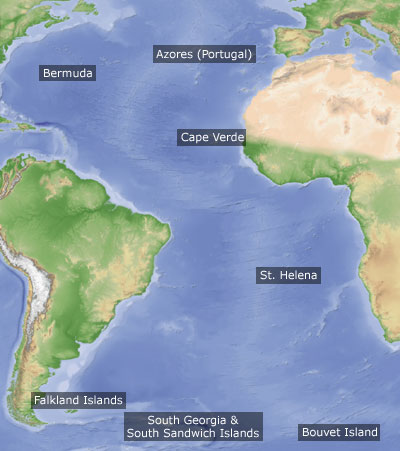
                                                                The image below shows you where the Atlantic is located
https://blogger.googleusercontent.com/img/b/R29vZ2xl/AVvXsEjAev1YZXpRUnsNtmOIar1EiYsEWzsiV6GoiR5mKJsXD4s5cumaGRnwuGnn4p2F8COyI2xjEoRmnFywkC7pHuqaP6L9P4hd7CzIXJlS3WqXQHUlslfTIz15hSPN-jahAJzxAI62_vZcTuww/s320/dir2.atlantic.jpg

Some of the most common minerals found in the Atlantic are Calcite, Limestone, and Dolomite. Those are very important minerals to everyday life because we use them in so many things. From all over the world people are fighting for them because they have many multiple values in them. And some examples are that the uses for calcite are medicine, toothpaste, and building materials. There are also more. Limestone is used in the purification of sugar, making paper white, medicine, and is aggregated in concrete, and those are only some of the hundreds of uses it has. 

Because of all these debates you may ask who owns the minerals. Well in my opinion I think that no one owns them. I do have a solution though, for example poor countries can trade with countries who boarded the ocean, and wealthy countries can pay countries who border the ocean to mine there.

To conclude this I think that the minerals belong to everyone, but some boundaries have to be made. I also think that the oceans do not belong to anyone. I hope that after reading this you formed an opinion, changed your opinion, or had more to back up your opinion!


Mining Minerals In California

California has a lot of mining in it. Some minerals that are mined there are Gypsum, mica, and silver. Even though California is called the Golden state and had a gold rush in the mid-eighteen hundreds, does not mean it is rich in Gold today. The reason there is not so much Gold in California now is because there were some extreme environmental flunkies. Some other minerals that are found in California are; Asbestos; Borax; Bromine; Clay; Copper; ; ; Iron Ore; Lead; Lithium Magnesium; Marble; Mercury; Molybdenum; Natural Gas; Petroleum; Platinum; Potash; Rare Earths; Salt; Sand & Gravel (construction);  Stone (crushed); Talc; Tungsten; and Zinc. Those are some of the, but the most common ones are milky quartz, sulfur, talc, magnetite, actinolite, mica.In my opinion I think that California is rich in minerals. Also Since it is bordering the Pacific Ocean, it has access to mining the oceans minerals. I personally also think that California in very lucky to be bordering the Pacific Ocean because it can earn a lot of money from it. In conclusion I have decided that California is very rich in mining.

Tuesday, April 19, 2011

Earths Inner Secrest Web


This is my web on the Earths inner secrets and I used bubblus.com for making this web. I have used notes in my notebook for all this information! In this web I talked about rocks and we put in everything that we learned in this unit.